



Flu
Cook County Department of Public Health follows the evidence-based vaccination recommendations from Illinois Department of Public Health , which are informed by the Illinois Immunization Advisory Committee. Illinois guidelines are consistent with current recommendations from the American Academy of Pediatrics and the American Academy of Family Physicians .
Get free flu and COVID-19 vaccinations at our Saturday vaccination clinics.
About Flu
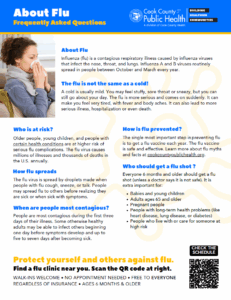
Influenza (flu) is a contagious respiratory illness caused by influenza viruses that infect the nose, throat, and lungs. Influenza A and B viruses routinely spread in people between October and March every year.
The flu is not the same as a cold!
A cold is usually mild. You may feel stuffy, sore throat or sneezy, but you can still go about your day. The flu is more serious and comes on suddenly. It can make you feel very tired, with fever and body aches. It can also lead to more serious illness, hospitalization or even death.
Who is at risk?
Older people, young children, and people with certain health conditions are at higher risk of serious flu complications. The flu virus causes millions of illnesses and thousands of deaths in the U.S. annually.
How flu spreads
The flu virus is spread by droplets made when people with flu cough, sneeze, or talk. People may spread flu to others before realizing they are sick or when sick with symptoms.
When are people most contagious?
People are most contagious during the first three days of their illness. Some otherwise healthy adults may be able to infect others beginning one day before symptoms develop and up to five to seven days after becoming sick.
How is flu prevented?
The single most important step inpreventing flu is to get a flu vaccine each year. The flu vaccine is safe and effective. Learn more about flu myths and facts at cookcountypublichealth.org.
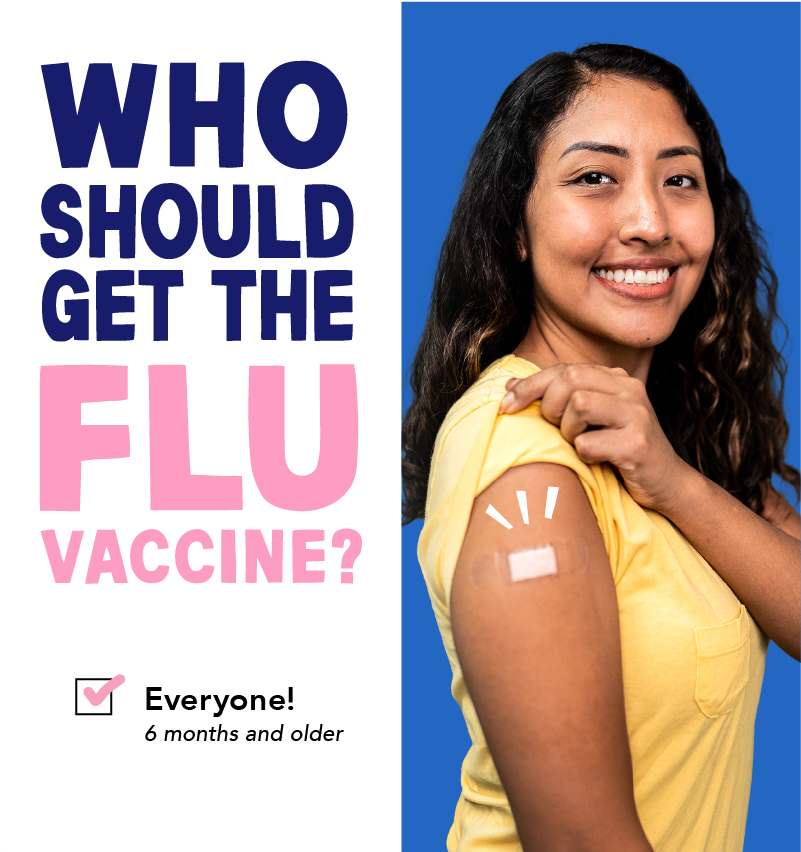
Who Should get the flu vaccine?
Updated October 2, 2026, 2:10 PM